Why Your Lighting BOQ Is Wrong Before the Project Even Starts, and How to Fix It
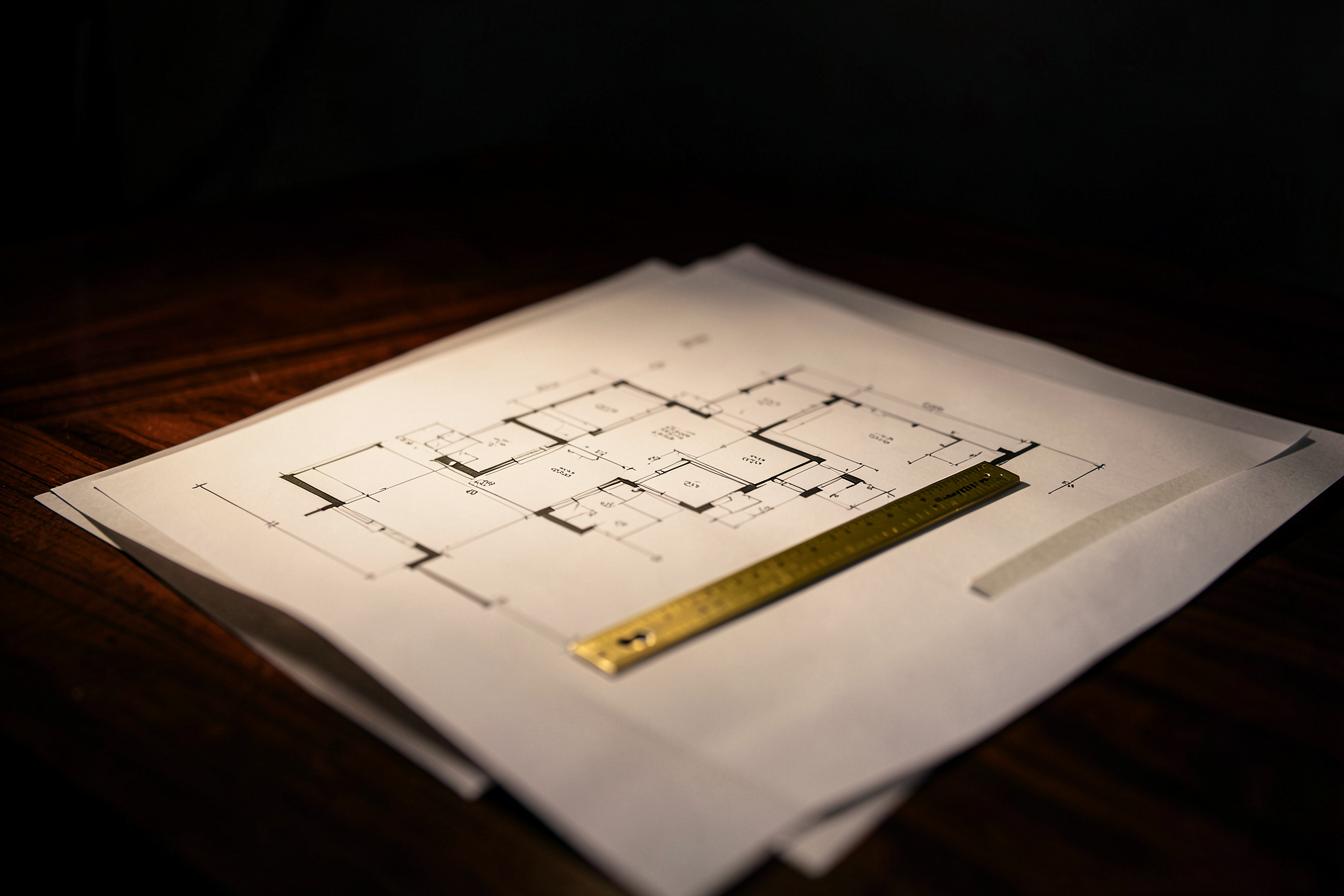
A BOQ can be perfectly formatted and commercially wrong. The error usually begins when a ceiling symbol is mistaken for a lighting decision.
Open any almost-final lighting project folder and you will usually find four versions of the truth. The reflected ceiling plan is on one revision. The fixture schedule is on another. The vendor has priced an older BOQ. The site team is working from a PDF somebody sent on WhatsApp three days ago. Every file is called final. None of them are the same final.
That is why a lighting BOQ rarely becomes wrong inside Excel. It becomes wrong much earlier, when the project begins treating quantity as a separate commercial exercise instead of the last expression of design intent.
A BOQ can look organised, carry ten columns of data and still be nothing more than a neatly formatted guess.
A composite project autopsy
Here is a composite version of a problem I have seen in different forms across projects. No single error is dramatic, which is precisely why the problem survives.
| What changed | What the BOQ still said | What happened next |
|---|---|---|
| A joinery wall moved by 300 mm | The wallwasher quantity and aiming stayed unchanged | The fittings were counted correctly and the wall was lit badly |
| A linear detail increased by 8 metres | Only the profile length changed | Drivers, feeds, connectors and wastage were missed |
| The control intent moved from phase dimming to DALI | The luminaire code stayed the same | The driver cost and addressing scope appeared after award |
| A ceiling height changed | The same output and optic remained in the schedule | The average lux looked acceptable, but the visual hierarchy collapsed |
| A vendor offered a cheaper equivalent | The comparison used wattage and price | The installed count rose because the distribution was different |
Nothing in that chain is a spreadsheet mistake. It is a continuity mistake. The BOQ did not know why each fitting existed, which drawing created the quantity, which assumption governed its performance or which revision changed it.
The BOQ does not begin with quantity
Most teams begin with the question, “How many fixtures are there?” That is usually the wrong first question.
The first questions should be: What is this space meant to feel like? What visual task is happening here? Which surfaces matter? What needs to be highlighted? What needs to remain quiet? Which scenes will the user actually need? What must be maintained, dimmed, replaced or controlled later?
Only after those answers are clear should the project arrive at fixture type, optical performance and quantity. If quantity is decided first, the BOQ becomes a record of ceiling symbols, not a record of lighting intent.
Where lighting BOQs usually go wrong
- The drawing and the BOQ are not working from the same revision. A ceiling changes, a joinery detail moves or a room function is updated, but the fixture count remains untouched.
- Fixture codes are defined visually instead of technically. “Black recessed downlight” is not a specification. Beam angle, lumen output, cut-off, driver type, dimming protocol, CCT, CRI, cut-out, finish and mounting condition can completely change the result.
- Accessories are treated as somebody else’s problem. Drivers, track adaptors, mounting sleeves, suspension kits, emergency packs, control modules, connectors and special housings are often omitted because they are not visible on the reflected ceiling plan.
- Controls are added at the end. A scheme may require phase dimming, 0 to 10 V, DALI, DMX, relay switching or a combination of systems. If control compatibility is not connected to the luminaire and driver selection, the BOQ can be technically complete and still fail on site.
- Substitutions are compared only by wattage and price. Two 12 W luminaires are not equivalent because the number on the driver matches. Distribution, lumen output, glare, colour quality, thermal performance and construction can be entirely different.
- The BOQ has no visible assumptions. Ceiling height, working plane, reflectance, maintenance factor, room use and target illuminance are often buried in somebody’s head. When the project changes, nobody knows what must be recalculated.
A reliable lighting BOQ needs more than fixture codes
At minimum, every luminaire line should answer four kinds of questions.
- First, what is it? The fixture code, family, description, mounting type, dimensions, cut-out and finish must be unambiguous.
- Second, what does it do? The BOQ should carry the performance logic that matters to the project, including lumen output, wattage, beam or distribution, CCT, CRI, glare requirement where applicable, ingress protection and emergency function.
- Third, how does it work as a system? Driver location, dimming protocol, control gear, accessories, track, wiring assumptions and integration requirements must be stated.
- Fourth, where is it in the commercial process? Quantity, approved brand, approved equivalent status, sample status, unit rate, landed cost assumptions, lead time and revision reference all matter. The cheapest fixture line can become the most expensive line if it requires an unplanned driver, adaptor, ceiling change or express shipment.
How to fix the BOQ before procurement begins
- Start by locking the project assumptions. Record the drawing revision, room function, ceiling height, target light levels, key surfaces, control intent and any design constraints.
- Build a fixture register before building the final BOQ. The register should connect every code to technical performance, visual purpose, control requirement and mounting condition.
- Link the fixture register to the drawing. A change in code, quantity or location should not live independently in three different files.
- Validate the system, not just the luminaire. Check the fixture, driver, controls, accessories, electrical load, maintenance access and installation detail together.
- Create a formal substitution rule. Any alternative must demonstrate technical equivalence using actual photometric information and system compatibility, not a similar catalogue image.
- Issue revisions with reasons. “Quantity changed from 42 to 48” is incomplete. The reason could be a revised ceiling, a changed beam angle, a new room use or an updated lux target. That reason is what protects the design and the commercial conversation.
What I actually want Alya to do here
I do not want Alya to count circles faster. Circle counting is useful, but it is not lighting intelligence. I want it to know why those circles exist.
A connected workflow should be able to say: this quantity came from RCP Revision D; it serves the art-wall wash; it was checked with a 24-degree optic at this ceiling height; it needs a DALI driver; the sample is approved; and the quantity changed because the joinery moved.
That is the standard Alya is being built towards. The designer still decides the light. The system protects the reasoning while the project changes.
AI should not design light for you. It should protect the intent while the project changes.
When is a BOQ actually finished?
A lighting BOQ is finished when every quantity has a reason, every product has a complete system, every substitution has evidence and every revision can be traced without archaeology.
Until then, it is not a commercial expression of the design. It is only a count, and a count is the easiest part of the project to make look correct.
Primary Sources and Fact-Check Notes
- ANSI/IES LP-16-22: Documenting Control Intent Useful for connecting lighting intent to documented control behaviour.
- DALI-2 overview Reference for certified interoperable digital lighting-control components.
- DALI Alliance certification Useful when control compatibility is part of procurement evidence.
Fact-checked 25 August 2026. Confirm the adopted standard and local requirements for each project.